

The Ultimate Guide to Plate & Frame Filter Press for Sludge Dewatering and Paddle Dryer for Sludge Drying
-
 AS Engineers
- in Blog

Did you know that effective sludge management can reduce waste volume by up to 90% while recovering valuable resources and cutting disposal costs by more than half? The secret lies in two critical technologies: plate & frame filter presses for sludge dewatering and paddle dryers for sludge drying. Whether you’re managing municipal wastewater, industrial byproducts, or mining residues, mastering these technologies can transform your operation’s efficiency and sustainability profile. This comprehensive guide will walk you through everything you need to know about selecting, implementing, and optimizing these essential sludge treatment solutions.
Understanding Sludge Management Challenges
Sludge management represents one of the most challenging aspects of wastewater treatment operations. With environmental regulations tightening globally and disposal costs rising annually, facilities face mounting pressure to optimize their sludge handling processes.
The Escalating Costs of Improper Sludge Management
Inefficient sludge processing directly impacts your bottom line through:
- Higher transportation fees due to excess water weight
- Increased disposal costs for larger sludge volumes
- Greater energy consumption during processing
- More frequent equipment maintenance and replacement
- Potential environmental compliance violations and fines
The most cost-effective solution involves a two-stage approach: dewatering sludge first using plate & frame filter presses, then further reducing moisture content through thermal drying with paddle dryers. This combination can dramatically reduce overall volume while creating safer, more manageable end products.
Plate & Frame Filter Press for Sludge Dewatering: Working Principles
A plate & frame filter press represents one of the most efficient mechanical dewatering technologies available today. Its popularity stems from its ability to achieve higher solid content compared to alternatives like belt presses or centrifuges.
How Plate & Frame Filter Presses Function
The plate & frame filter press operates on a straightforward yet remarkably effective principle:
- Filtration Chamber Formation: The system alternates rectangular plates and frames, creating sealed chambers when compressed together.
- Slurry Introduction: Pumps feed sludge slurry into these chambers under pressure (typically 7-15 bar).
- Filtration Process: As pressure builds, water passes through filter cloths covering the plates while solids remain trapped.
- Cake Formation: Solids accumulate within the chambers, forming increasingly dense “cakes.”
- Final Compression: Once chambers are filled, additional pressure may be applied to maximize water removal.
- Cake Discharge: After completion, the press opens, and dewatered sludge cakes drop from between the plates.
The result is dewatered sludge with 30-50% solids content—significantly higher than the 15-25% achieved with centrifuges or 15-30% with belt presses.
Key Components of an Effective Filter Press System
An optimized plate & frame filter press consists of:
- Filter Plates: Usually polypropylene plates with various surface patterns
- Filter Cloths: Specialized fabrics that determine filtration efficiency
- Frame Structure: The robust framework supporting the entire assembly
- Hydraulic Closing System: Provides the pressure needed for proper sealing
- Feed Pump: Delivers sludge to the press under controlled pressure
- Control System: Manages operational parameters and cycles
- Cake Discharge System: Facilitates efficient removal of dewatered material
Understanding these components helps in selecting the right configuration for your specific application.
Selecting the Right Plate & Frame Filter Press for Your Needs
Choosing the appropriate plate & frame filter press requires careful consideration of several factors:
Capacity Requirements
Filter press sizing depends primarily on:
- Daily sludge volume
- Processing time requirements
- Available space
- Desired cake dryness
Most manufacturers provide specifications in terms of chamber volume or filtration area. As a general guideline, you’ll need approximately 1-2 cubic meters of chamber volume per ton of dry solids processed daily.
Plate Design Considerations
The plate design significantly impacts performance:
- Recessed Plates: Standard design with moderate cake thickness
- Membrane Plates: Feature flexible membranes for additional squeezing
- Mixed Configurations: Combine different plate types for optimized performance
Membrane plates typically achieve 3-5% higher solid content but come at a premium price point.
Automation Level
Modern filter presses offer various automation levels:
- Basic Manual: Requires operator intervention at each step
- Semi-Automatic: Automates portions of the cycle while requiring some manual operations
- Fully Automatic: Complete hands-off operation from filling to discharge
The right automation level depends on labor costs, operational schedule, and process consistency requirements.
Optimizing Filter Press Performance for Sludge Dewatering
Achieving optimal performance from your plate & frame filter press involves several critical factors:
Proper Chemical Conditioning
Effective chemical conditioning dramatically improves dewatering efficiency:
- Polymer Selection: Choose flocculants appropriate for your specific sludge characteristics
- Dosage Optimization: Too little creates ineffective flocculation; too much wastes chemicals and can hinder filtration
- Mixing Parameters: Proper energy input ensures uniform conditioning without breaking flocs
Regular jar testing helps maintain optimal chemical programs as sludge characteristics change.
Operating Parameters Refinement
Fine-tuning operational settings maximizes results:
- Feed Pressure: Starting with lower pressure (3-5 bar) and gradually increasing often produces better results than immediate high pressure
- Cycle Time: Determining the optimal point between throughput and cake dryness
- Cloth Selection: Matching cloth specifications to sludge characteristics
Small adjustments in these parameters can yield significant improvements in both cake dryness and cycle times.
Preventive Maintenance Practices
Regular maintenance ensures consistent performance:
- Cloth Cleaning: Regular washing removes embedded particles
- Plate Inspection: Checking for cracks or damage
- Hydraulic System Maintenance: Ensuring proper pressure and even distribution
- Feed Pump Upkeep: Maintaining optimal pumping characteristics
A documented maintenance program can extend equipment life while maintaining peak performance.
Limitations and Challenges of Filter Press Technology
Despite their advantages, plate & frame filter presses have some limitations:
- Batch Processing: Inherently discontinuous operation
- Labor Requirements: Higher than some competing technologies
- Footprint Considerations: Larger space requirements than centrifuges
- Capital Investment: Generally higher initial cost
For many facilities, these limitations are outweighed by superior dewatering performance and lower operating costs over time.
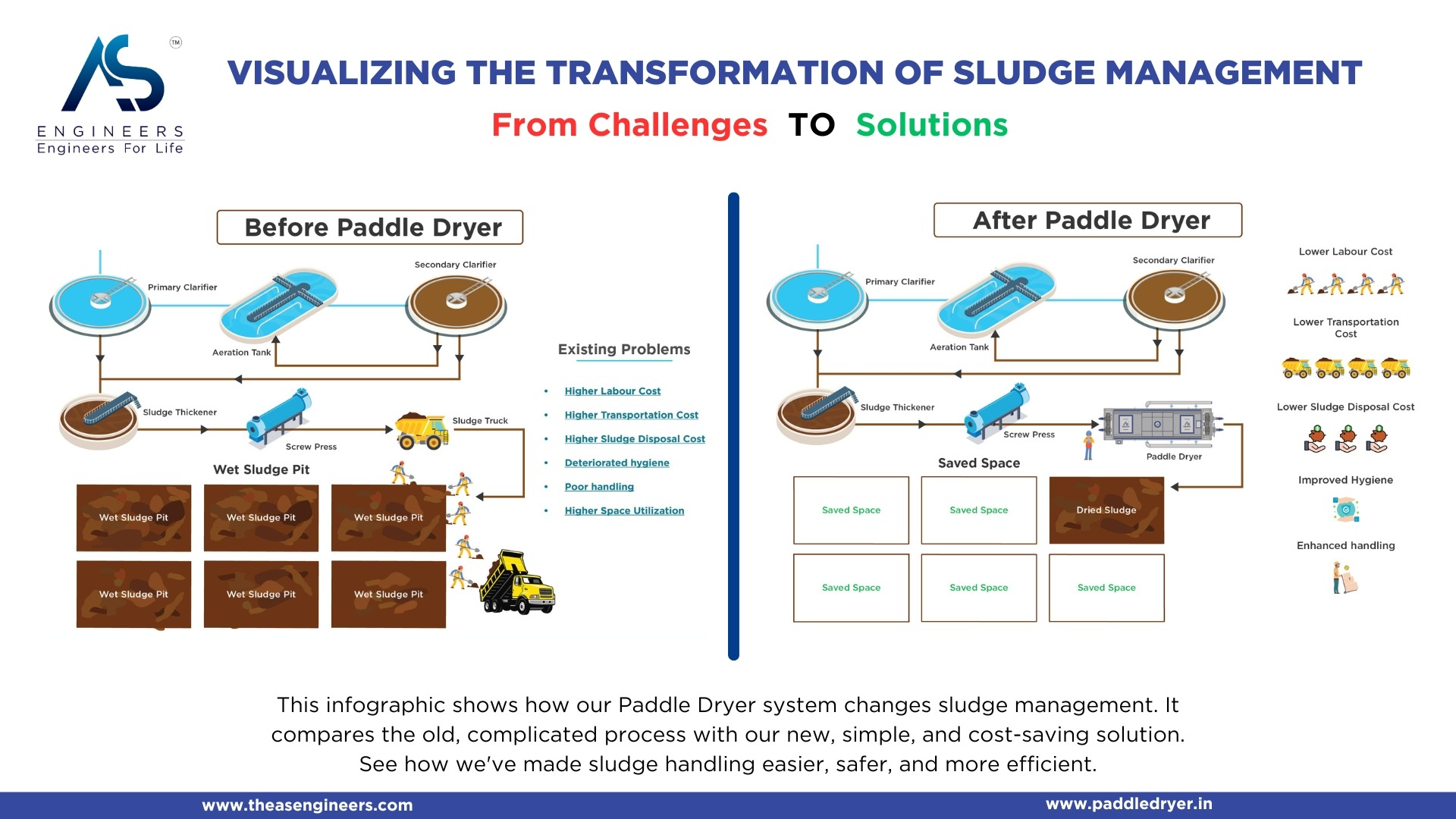
The Ultimate Guide to Plate & Frame Filter Press for Sludge Dewatering and Paddle Dryer for Sludge Drying
Paddle Dryers for Sludge Drying: Technology Overview
After dewatering with a filter press, paddle dryers offer an excellent second-stage solution for further moisture reduction. These thermal drying systems can reduce moisture content from 50-70% down to 10% or less.
How Paddle Dryers Work
Paddle dryers utilize an elegant indirect heat transfer mechanism:
- Hollow Shaft and Paddle Design: The dryer features a hollow shaft and paddles through which thermal oil or steam circulates.
- Material Movement: The rotating paddles continuously mix and advance the material through the drying chamber.
- Heat Transfer: Conductive heat transfers from the heated surfaces to the sludge.
- Moisture Evaporation: Water evaporates and exits through vapor ports.
- Dried Product Discharge: The dried material leaves the system at the outlet end.
This indirect heating approach offers several advantages over direct drying methods, including improved energy efficiency and reduced emission challenges.
Key Components of Paddle Dryer Systems
A complete paddle dryer system includes:
- Drying Chamber: The insulated vessel housing the paddle assembly
- Paddle Assembly: Hollow shafts and paddles that transfer heat
- Heating System: Typically thermal oil or steam generation equipment
- Vapor Handling System: Collects and treats evaporated moisture
- Material Handling Equipment: For feeding and discharging material
- Control System: Manages temperature, rotation speed, and other parameters
The integration of these components creates a highly efficient thermal drying solution.
Selecting the Right Paddle Dryer for Sludge Processing
Choosing an appropriate paddle dryer involves evaluating several key factors:
Capacity and Sizing Considerations
Proper sizing depends on:
- Daily throughput requirements
- Initial and target moisture content
- Available heat source
- Processing schedule (batch vs. continuous)
Most manufacturers specify capacity in terms of water evaporation rate (kg/h) rather than material throughput.
Energy Source Selection
Paddle dryers can utilize various heat sources:
- Steam: Common in facilities with existing boilers
- Thermal Oil: Offers higher temperatures and precise control
- Electric Heating: For smaller systems or where other energy sources aren’t available
- Waste Heat Recovery: Utilizing excess heat from other processes
The optimal choice depends on available infrastructure, energy costs, and operational requirements.
Material Construction
Material selection impacts longevity and maintenance needs:
- Carbon Steel: Economical but with shorter lifespan
- Stainless Steel: Resistant to corrosion but more expensive
- Special Alloys: For highly corrosive sludges
The appropriate material depends on sludge characteristics, especially pH, chloride content, and abrasiveness.
Optimizing Paddle Dryer Performance
Maximizing the efficiency of your paddle dryer involves attention to several operational aspects:
Feed Consistency Management
Consistent feed material optimizes drying performance:
- Moisture Content: Maintaining consistent input moisture
- Particle Size: Controlling the size distribution of incoming material
- Feed Rate: Ensuring steady, controlled material introduction
Variations in these parameters necessitate system adjustments and can reduce overall efficiency.
Temperature Control Strategy
Effective temperature management balances drying efficiency against potential issues:
- Maximum Temperature: Higher temperatures increase capacity but may create material quality issues
- Temperature Profile: Gradual heating often works better than immediate high temperatures
- Differential Settings: Different temperature zones handle varying moisture content stages
Modern control systems can maintain precise temperature profiles throughout the drying process.
Residence Time Optimization
Residence time directly impacts final moisture content:
- Paddle Speed: Affects how quickly material moves through the system
- Chamber Loading: Influences material thickness and heat transfer efficiency
- Paddle Design: Different configurations create varying mixing patterns
Finding the optimal balance between throughput and final dryness requires systematic testing and adjustment.
Environmental and Safety Considerations for Paddle Dryers
Thermal drying systems require careful attention to environmental and safety aspects:
Emissions Management
Vapor emissions may contain:
- Odorous Compounds: Requiring treatment before release
- Particulates: Necessitating proper filtration
- Volatile Organic Compounds: Potentially requiring thermal oxidation
A properly designed vapor handling system addresses these concerns through appropriate treatment technologies.
Energy Efficiency Practices
Optimizing energy use improves both environmental performance and operating costs:
- Heat Recovery Systems: Capturing and reusing thermal energy
- Insulation Quality: Minimizing heat losses
- Process Integration: Using waste heat from other facility operations
These practices can reduce energy consumption by 20-40% compared to standard configurations.
Safety Systems Implementation
Thermal drying systems require comprehensive safety measures:
- Temperature Monitoring: Preventing overheating scenarios
- Pressure Relief: Managing unexpected pressure buildup
- Explosion Prevention: Addressing dust explosion risks
- Emergency Shutdown Systems: Enabling rapid system deactivation
Modern systems incorporate multiple redundant safety features to protect both equipment and personnel.
Integration of Filter Press and Paddle Dryer Systems
While each technology offers significant benefits independently, their combination creates a particularly powerful sludge management solution.
Process Flow Optimization
An integrated system should consider:
- Intermediate Storage: Buffer capacity between batch dewatering and continuous drying
- Material Handling: Efficient transfer mechanisms between processes
- Control System Integration: Coordinated operation of both systems
- Scheduling Optimization: Aligning operational cycles for maximum efficiency
Well-designed integration minimizes handling requirements while maximizing overall system efficiency.
Case Study: Municipal WWTP Implementation
A municipal wastewater treatment plant serving 250,000 residents implemented an integrated filter press and paddle dryer system with impressive results:
- 85% reduction in sludge volume
- 40% decrease in disposal costs
- Production of Class A biosolids suitable for beneficial reuse
- 30% overall reduction in sludge management costs
- Carbon footprint reduction equivalent to removing 500 cars from the road
The facility achieved full return on investment within 3.7 years, demonstrating the economic viability of this approach.
Case Study: Industrial Application
A food processing facility handling 15 tons of biological sludge daily implemented a similar integrated solution:
- 92% volume reduction
- Conversion of waste material into marketable soil amendment
- Creation of a revenue stream from what was previously a disposal expense
- 45% reduction in overall waste management costs
- Enhanced environmental compliance status
The project transformed a costly waste management problem into a value-added operation.
Economic Analysis: Making the Business Case
Implementing advanced sludge handling equipment requires substantial capital investment. Understanding the economic dynamics helps justify these expenditures.
Capital Expenditure Considerations
Initial investments typically include:
- Equipment purchase costs
- Installation expenses
- Facility modifications
- Commissioning and startup
- Operator training
For medium-sized operations, complete systems typically range from $1-3 million depending on capacity and specifications.
Operating Cost Analysis
Ongoing operational costs include:
- Energy consumption
- Chemical usage
- Maintenance requirements
- Labor needs
- Disposal fees for end products
These costs are typically 40-60% lower than conventional approaches without advanced dewatering and drying.
Return on Investment Calculation
The economic justification typically centers on:
- Reduced disposal costs due to volume reduction
- Lower transportation expenses
- Potential revenue from beneficial reuse
- Reduced environmental compliance risks
- Extended landfill life
Most facilities achieve ROI within 3-5 years, with smaller operations typically at the longer end of this range.
Future Trends in Sludge Dewatering and Drying Technology
The field continues to evolve with several emerging trends:
Increased Automation and Intelligence
Next-generation systems feature:
- Predictive Maintenance: Using sensors and AI to anticipate service needs
- Self-Adjusting Operations: Automatically optimizing parameters based on feed characteristics
- Remote Monitoring: Enabling offsite supervision and troubleshooting
- Performance Analytics: Providing insights for continuous improvement
These advances reduce operational complexity while improving consistency.
Energy Efficiency Innovations
Newer designs emphasize energy optimization through:
- Advanced Heat Recovery: Capturing previously wasted thermal energy
- Variable Frequency Drives: Matching energy use to actual requirements
- Smart Control Algorithms: Optimizing energy input based on process needs
- Alternative Energy Integration: Incorporating renewable sources where feasible
These improvements can reduce energy costs by 15-30% compared to conventional systems.
Resource Recovery Focus
The paradigm is shifting from waste treatment to resource recovery:
- Phosphorus Recovery: Extracting valuable nutrients
- Biochar Production: Creating soil amendments with carbon sequestration benefits
- Energy Generation: Using dried material as fuel
- Specialized Product Development: Creating tailored materials for specific markets
This evolution transforms sludge management from a cost center to a potential revenue source.
Common Troubleshooting Issues and Solutions
Even well-designed systems encounter operational challenges. Understanding common issues helps maintain optimal performance.
Filter Press Problems and Resolutions
Frequent challenges include:
- Poor Cake Release: Often resolved by adjusting cloth type or cleaning procedures
- Excessive Cycle Times: Typically addressed through chemical program optimization
- Leakage Between Plates: Usually fixed by inspecting and replacing gaskets or plates
- Inconsistent Cake Moisture: Generally improved by standardizing feed characteristics
Regular preventive maintenance prevents many of these issues before they impact operations.
Paddle Dryer Issues and Fixes
Common paddle dryer challenges include:
- Material Buildup: Addressed through paddle design modifications or cleaning protocols
- Uneven Drying: Typically resolved by adjusting temperature profiles or mixing patterns
- Excessive Dust Generation: Usually managed through moisture control and handling modifications
- Thermal Efficiency Losses: Generally improved by inspecting and upgrading insulation
Manufacturer-recommended maintenance schedules help prevent many of these problems.
Implementation Best Practices
Successful implementation involves several key considerations:
Project Planning Approach
Effective planning includes:
- Thorough Characterization: Testing sludge properties under various conditions
- Pilot Testing: Verifying performance with actual materials
- Phased Implementation: Starting with critical components before full deployment
- Contingency Planning: Maintaining backup capabilities during transitions
This methodical approach minimizes disruptions while validating performance.
Operator Training Requirements
Comprehensive training covers:
- Operational Procedures: Day-to-day running of the equipment
- Maintenance Protocols: Preventive and corrective maintenance tasks
- Troubleshooting Skills: Identifying and addressing common issues
- Process Optimization: Fine-tuning for maximum efficiency
Investing in operator capability ensures maximum return on equipment investment.
System Integration Considerations
Effective integration requires attention to:
- Control System Compatibility: Ensuring smooth information flow between components
- Space Optimization: Efficient layout of interconnected systems
- Utility Management: Coordinating power, water, and compressed air needs
- Maintenance Access: Providing adequate space for service activities
Thoughtful integration planning prevents costly modifications after installation.
Conclusion: Maximizing Your Sludge Management Investment
Investing in plate & frame filter press technology for sludge dewatering coupled with paddle dryer systems for thermal drying represents a comprehensive approach to modern sludge management challenges. When properly selected, implemented, and operated, these technologies deliver substantial benefits:
- Dramatic reduction in sludge volume and disposal costs
- Creation of safer, more stable end products
- Potential for beneficial reuse of processed materials
- Improved environmental compliance profile
- Lower overall lifecycle costs
By following the guidance provided in this comprehensive overview, facilities can navigate the complex decision-making process involved in sludge management system selection and implementation. The result is a more efficient, more sustainable, and more economical approach to one of the most challenging aspects of wastewater treatment operations.