
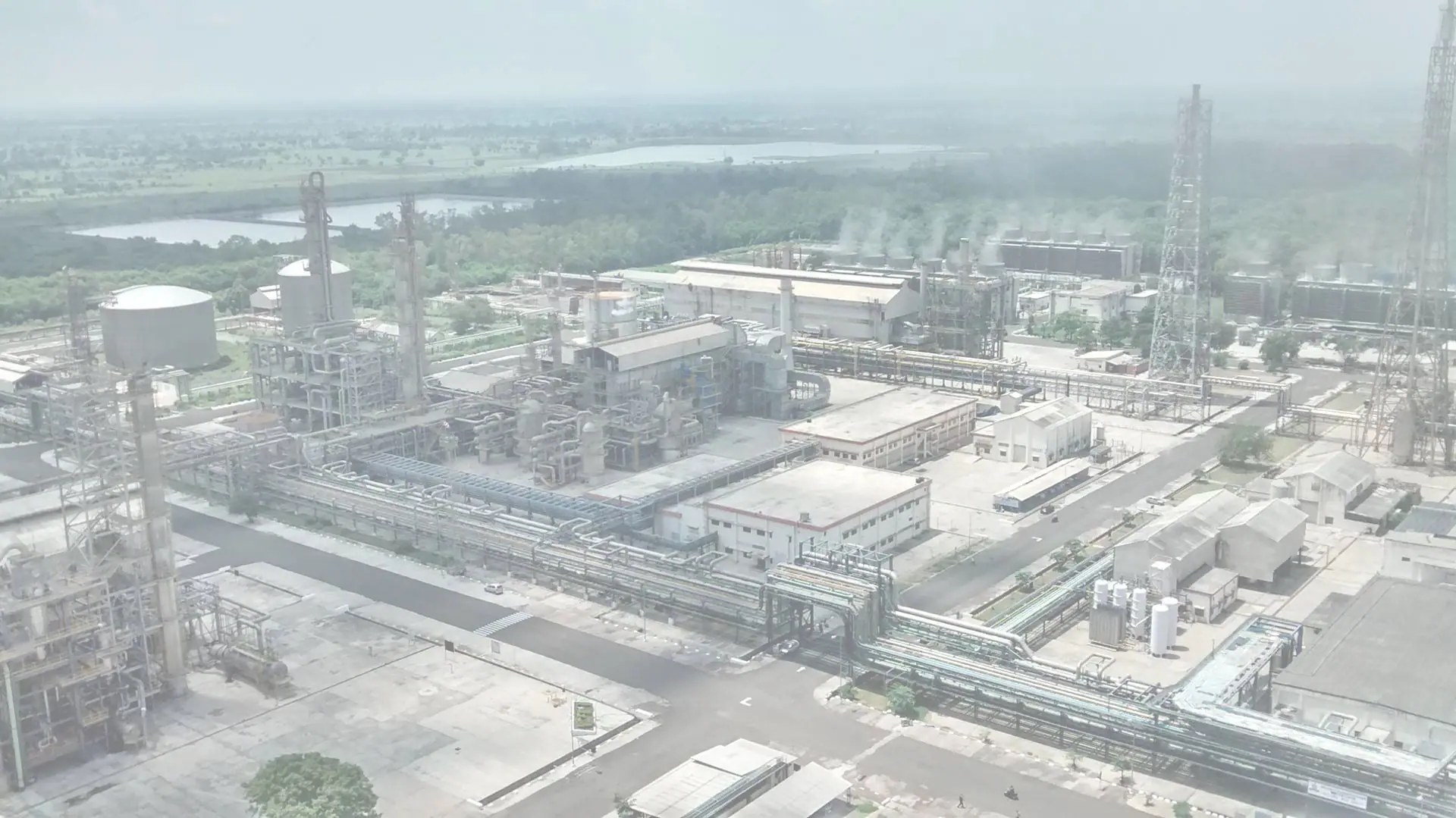
Centrifugal Blowers and Paddle Dryers for the Fertilizer Industry
A fertilizer plant runs multiple fan duties in parallel — combustion air supply, fumes extraction, granule cooling, dust handling, scrubber exhaust, and ETP aeration can all be active in the same facility. Each duty has its own flow range, static pressure, gas composition, and corrosion risk. Selecting the wrong fan type, or the wrong material of construction for the process gas, creates problems in operation that cannot be fixed without a shutdown.
AS Engineers has supplied centrifugal blowers to fertilizer and allied industries for over 24 years. Our client base includes Coromandel International, one of India’s largest integrated agri-solutions and fertilizer manufacturers. Every blower is IS 4894 tested before dispatch. ISO 9001:2015 certified.
Centrifugal Blower Applications in Fertilizer Plants
Fertilizer plant blower duties divide broadly into three service environments: hot gas and combustion air, process fumes and corrosive vapour, and dry granular material handling. Each environment calls for a different impeller geometry, a different casing design, and a different approach to sealing and maintenance access.
Fuel gas blower
The fuel gas blower supplies and circulates fuel gas in combustion systems across reformers, furnaces, and boilers in nitrogenous fertilizer and ammonia-based plants. The duty demands pressure consistency and seal integrity. Gas leakage or pressure drops in this service affect combustion efficiency and create safety exposure. The blower casing must handle the gas composition without seal degradation.
Fumes fan for DAP, NPK, and process sections
DAP (Diammonium Phosphate) and NPK production generate process fumes containing ammonia vapour, phosphoric acid mist, and fluoride compounds. Fumes fans extract these from production sections before they accumulate to harmful concentrations, and the extracted stream is typically directed to a scrubber system. The impeller and casing must resist the combined corrosive effect of ammonia and acid vapour. Rubber-lined casings or SS316 construction are common choices depending on vapour concentration and temperature.
Rotary cooler fan and de-dusting fan
Post-granulation, fertilizer granules exit hot and require air cooling through a rotary drum cooler. The cooling fan must deliver high, stable airflow at moderate static pressure. The de-dusting fan handles the fine dust entrained in the cooling air stream, typically in combination with cyclone separators as primary separation and bag filters for final clean-up. Dust-laden duties at this stage require a radial or backward-inclined impeller with non-stick geometry.
Granular exhaust fan
Granular exhaust fans remove moisture-laden and process-laden air from dryer sections, storage areas, and granule handling points. The duty point must remain stable across varying throughput rates. Material carryover potential means the impeller must be robust enough to handle intermittent ingestion of granule fines without damage.
Scrubber exhaust fan
Scrubber exhaust fans draw process air through wet scrubbers before stack discharge. In fertilizer plant service, the scrubber handles ammonia, fluoride, or acid fumes depending on the process section. The fan sees moist, partially cleaned gas — often at slightly elevated temperatures — and must perform reliably across the scrubber’s hydraulic resistance range. CPCB stack emission norms apply to discharges from DAP and NPK plants; the scrubber-fan system must be matched to meet the applicable consent limits.
De-dusting air heater fan
In sections requiring heated air supply for de-dusting or process conditioning, the fan must handle the combined demand of temperature and cleanliness. The bearing arrangement and impeller clearances must account for thermal expansion at operating temperature.
Prilling tower ventilation fan
Urea plants use prilling towers where molten urea is sprayed downward into a rising air column. Large-volume, low-to-medium pressure axial or centrifugal fans provide this counter-current air supply. The air stream carries prilling dust and the fan must handle this load continuously over long operating campaigns.
Application-to-Blower-Type Mapping
| Duty | Typical flow range | Impeller type | MOC |
|---|---|---|---|
| Fuel gas blower | 1,000–15,000 CMH | Backward inclined / backward curved | SS316 or MS with gas-tight seals |
| DAP/NPK fumes extraction | 5,000–40,000 CMH | Backward inclined | SS316 or rubber-lined MS |
| Rotary cooler air supply | 20,000–80,000 CMH | Backward curved | MS with dust-tolerant clearances |
| De-dusting fan | 5,000–30,000 CMH | Radial blade | MS or SS304 |
| Granular exhaust | 10,000–50,000 CMH | Radial blade | MS |
| Scrubber exhaust | 5,000–35,000 CMH | Backward inclined | SS316 or FRP-lined [VERIFY with Kartik] |
| Prilling tower ventilation | 50,000–2,00,000+ CMH | Backward curved / axial | MS |
| High-temperature combustion air | 3,000–20,000 CMH | High temperature plug blower | MS with heat-rated bearings and seals |
All blowers are tested to IS 4894. Dynamic balancing G6.3 standard; G2.5 on request.
Paddle Dryer for Fertilizer Plant ETP Sludge
Every fertilizer manufacturing plant with an effluent treatment plant generates biological sludge. This sludge, with inlet moisture content typically ranging from 70 to 85%, cannot be landfilled or transported economically in its wet form. Disposal cost for untreated wet sludge is approximately Rs 25 per kg.
The sludge dryer from AS Engineers uses indirect contact heat transfer — the product never contacts the heating medium. Heat passes through hollow wedge-shaped paddles and the jacketed trough wall, using steam or thermic fluid as the heating medium. This means no combustion gases contact the sludge stream, and the operating environment is controlled and enclosed.
What the paddle dryer achieves for fertilizer plant ETP sludge:
- Outlet moisture reduced to below 15%
- Volume reduction of 80 to 90%, cutting disposal weight and transport cost significantly
- Dried output can be evaluated for agricultural application as bio-fertilizer — subject to analysis and relevant state authority registration under the Fertilizer (Control) Order, 1985
- Operating cost: Rs 5.45 to 7.50 per kg of dried output (at Rs 10/kWh) — versus Rs 25/kg for wet sludge disposal
- Payback period: approximately 12 to 13 months for a 500 kg/day installation
The paddle dryer does not rely on hot air drying. There is no dryer exhaust fan carrying sludge-laden air out of the system, and no risk of odour or particulate release from a dryer exhaust stack. The indirect contact design keeps the system contained.
Construction material: carbon steel standard; SS304L or SS316L for sludge with elevated chloride or acid content.
Why Fertilizer Plants Specify from AS Engineers
The blower and the paddle dryer are not specified the same way. The blower is specified by duty point: flow, static pressure, gas composition, temperature, and operating schedule. The paddle dryer is specified by throughput, inlet and outlet moisture, heat medium availability, and footprint constraints.
Both decisions have one thing in common: a generic supplier without application-specific engineering produces equipment that works in the factory acceptance test and underperforms in field conditions where process gas composition, temperature swings, dust loads, and operating continuity are all different from the test parameters.
Our application engineers review the actual process data — not just a catalogue number — before recommending a configuration. For fertilizer plant applications specifically, this matters in the fumes fan selection (where gas analysis determines MOC), the granular exhaust fan (where dust density and particle size determine impeller geometry), and the paddle dryer (where sludge rheology determines shaft speed and paddle spacing).
For plants with installed blowers requiring repair, balancing, or performance restoration, centrifugal blower services are available for equipment from any manufacturer.
Common Questions from Fertilizer Plant Buyers
Which blower type is best for DAP fumes extraction?
A backward-inclined centrifugal blower in SS316 construction is the most common choice for DAP fumes duty. The backward-inclined impeller handles the moderately corrosive, low-to-medium dust-load gas stream well, and SS316 resists the combined ammonia and phosphoric acid vapour environment. For higher acid concentrations, rubber-lined MS casing may be a more economical option — the right choice depends on the actual vapour composition and temperature at the fan inlet.
Can the paddle dryer handle fertilizer ETP sludge that contains high suspended solids?
Yes. The wedge-shaped paddle geometry and the trough design are suited to sludge with high suspended solids and varying rheology. The paddle dryer has been used for municipal sludge and industrial ETP sludge across chemical and process industries. For fertilizer plant ETP sludge specifically, inlet moisture of 70 to 85% is within the normal operating range. Back-mixing with dried product is an option where inlet sludge is particularly sticky.
Does the scrubber exhaust fan need to be explosion-proof in ammonia service?
For ammonia fumes duties, the fan motor, electrical connections, and control gear must be specified to the applicable hazardous area zone classification under IS/IEC 60079. This is a site-specific determination based on the hazardous area drawing for the plant. AS Engineers specifies the fan mechanical design; the hazardous area classification of the motor and controls is confirmed with the plant’s electrical and safety team.
What is the typical lead time for a fertilizer-grade blower?
For standard centrifugal blower configurations in MS or SS304, lead time is typically 6 to 10 weeks from confirmed order. For SS316 construction or non-standard impeller diameters, 8 to 12 weeks. For urgent site requirements, our team can advise on availability from current manufacturing schedules.
Can AS Engineers supply both the blowers and the paddle dryer for a fertilizer plant ETP expansion?
Yes. The blower for ETP aeration and the paddle dryer for ETP sludge drying can be quoted together with matched specifications for the same ETP capacity. This removes the coordination gap that often exists between separate blower and dryer vendors on ETP projects.
Share Your Process Data
Fertilizer plant air system and sludge drying requirements vary significantly by plant type, capacity, and process section. The most direct way to get an accurate equipment recommendation is to share your process data.
For blowers: flow, static pressure, gas composition, inlet temperature, dust load, and MOC preference. For paddle dryer: daily sludge volume, inlet moisture content, heat medium available, and outlet moisture target.