
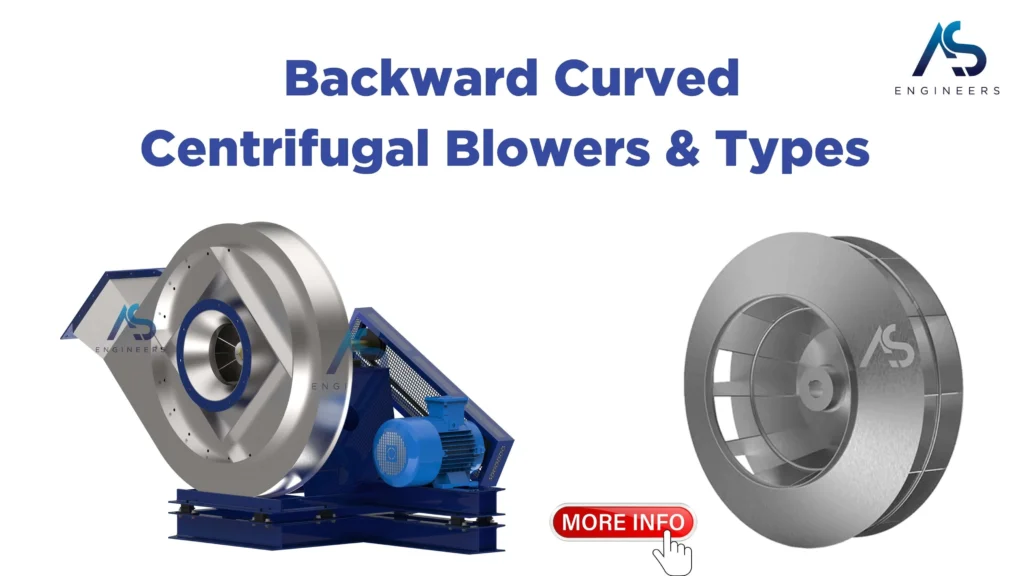
Backward Curved Centrifugal Blower: Types, Uses, and Selection Guide

When a plant needs efficient air movement without treating the blower as a commodity item, backward curved centrifugal blowers usually come into the discussion early. They are widely considered for industrial air-handling duty because the impeller profile supports strong performance with a non-overloading power curve, high efficiency, and suitability for clean-air and light-particulate applications. ASE’s current product page for this range also positions the blower for high air volumes, high static pressure duty, and industrial use across multiple sectors.
The problem is that many buyers search for “backward curved blower” and land on generic articles that explain the term without helping them select the right configuration. In practice, the better question is not only what a backward curved centrifugal blower is, but where it fits, what performance points matter, and when a plant should move from a standard selection to a custom-built solution. That is where this guide is meant to help.
What is a backward curved centrifugal blower?
A backward curved centrifugal blower uses impeller blades that curve away from the direction of rotation. In operation, that blade profile helps deliver efficient airflow with lower power-loading risk at the upper end of the curve, which is one reason this blower type is frequently considered in industrial ventilation and process-air systems. ASE’s product page describes backward curved centrifugal fans as suitable for moving high air volumes at high static pressures, with high static efficiencies and applicability in clean-air and light-dust duty.
For buyers evaluating blower families, this blower type sits within ASE’s broader Centrifugal Blowers range, alongside Backward Inclined Blowers, High Pressure Radial Blade Blowers, High Temperature Plug Blowers, and other industrial air-handling designs. That matters because the right blower choice depends on the actual duty, not only on the popularity of one impeller style.
Why plants choose backward curved centrifugal blowers
High efficiency for continuous-duty systems
In industrial air systems, blower operating cost often matters more over time than initial purchase cost alone. Backward curved designs are usually preferred where energy efficiency is important, especially in continuous or long-hour operation. ASE’s current backward curved product page highlights efficiency up to 85% and positions the design around optimum performance with minimal energy use.
Useful for higher airflow and meaningful system resistance
A backward curved centrifugal blower is often chosen where the system needs more than simple ventilation air movement. ASE’s current range for this product lists airflow from 14,000 to 7,50,000 CMH and static pressure from 40 to 2000 MMWC, which makes it relevant for a wide span of industrial air-handling duties.
Better fit for engineered industrial selection
This blower category is not usually selected well from a one-line brochure comparison. Performance depends on air volume, static pressure, temperature, operating conditions, and construction arrangement. ASE’s product page lists SWSI and DWDI construction options and temperature handling up to 200°C, which reinforces that this is an engineering selection, not only a catalog purchase.
Common industrial uses
Backward curved centrifugal blowers are generally considered for industrial ventilation, exhaust handling, process-air duty, HVAC-related airflow, and selected pollution-control or treatment-related systems where efficient, reliable airflow matters. ASE’s live product and category pages position this blower family for forced-draft and induced-draft roles and for multiple industrial sectors.
From a buyer’s point of view, the more useful approach is to evaluate the application by duty type:
- continuous plant ventilation or process-air movement
- induced draft or forced draft duty
- cleaner air streams or light particulate handling
- systems where efficiency and stable blower behavior matter over long operating hours
That application-first view helps avoid choosing purely by blower name while missing the actual system requirement.
Types and configurations buyers usually compare
The current version of this page lists direct drive, belt drive, variable-speed, plug-fan, and airfoil-style variations. Instead of presenting them as a long generic list, it is more useful to frame them around selection logic. The real comparison usually comes down to drive arrangement, airflow control requirement, installation layout, and maintenance preference.
For most industrial buyers, the practical configuration questions are:
- Do you need direct drive or belt drive?
- Does the system need variable airflow control?
- Is the blower part of a standard package or a custom-built air-handling system?
- Is the duty close to standard backward curved selection, or does it require a Make-To-Order Blower approach?
ASE already has dedicated pages for Make-To-Order Blower projects and Centrifugal Blower Services, which makes this page stronger as a guide page that routes the buyer to the right next step rather than trying to hold every commercial intent on one URL.
What to check before selecting a backward curved blower
1. Air volume and static pressure
Start with airflow and resistance. A blower should be selected around actual system demand, not around a nominal machine size. ASE’s backward curved blower page already publishes the core performance envelope, which is the right starting point for serious technical discussions.
2. Temperature and air-stream condition
Temperature affects material choice, bearing arrangement, sealing approach, and overall design suitability. ASE’s current page lists operating temperature up to 200°C for the backward curved range, while the Backward Inclined Fan page positions that family more directly for clean-air and higher-temperature applications up to 250°C. That makes the sibling page a useful internal comparison point when the duty is temperature-led.
3. Construction and installation arrangement
SWSI versus DWDI, direct versus belt drive, and installation footprint all affect serviceability and fit. These are not minor details for industrial plants because access, balancing, maintenance, and future performance tuning all depend on them. ASE’s product and service pages support that broader engineering conversation rather than reducing selection to one brochure line.
4. Lifecycle support
Blower buying decisions should include support after supply. ASE’s Centrifugal Blower Services page covers quotation support, performance analysis, and engineering help, while the Spare Parts page covers blower components such as impellers and bearings. For operating plants, that is part of the selection decision from the beginning, not something to think about only after a breakdown.
How AS Engineers supports backward curved blower requirements
AS Engineers already has a dedicated Backward Curved Centrifugal Fan product page for commercial and specification-led inquiries. That page is the right destination when the user is ready to review blower range, performance envelope, and product-level details. This page works better as the supporting guide that explains the blower type, helps the buyer qualify the duty, and then routes them toward the correct product or service page.
For plants that need a tailored solution instead of a standard configuration, ASE also has a Make-To-Order Blower page built around custom-designed blower solutions and a Centrifugal Blower Services page focused on technical support. When the next step is direct discussion, the Contact page provides phone, email, and Ahmedabad office details for the team.
Frequently asked questions
Where is a backward curved centrifugal blower usually used?
It is commonly considered for industrial air-handling, ventilation, exhaust, forced-draft, induced-draft, and selected process-air applications where efficiency and stable blower performance matter. ASE’s own product and category pages position this blower family across a broad industrial-use range.
What is the main advantage of a backward curved blower?
The main advantage is usually the combination of efficient airflow, a non-overloading power curve, and suitability for engineered industrial duty. ASE’s product page explicitly highlights these points for its backward curved range.
How do I know whether I need backward curved or another blower type?
Start with air volume, static pressure, air-stream condition, temperature, and maintenance expectations. Then compare the duty against ASE’s Centrifugal Blowers range and related pages such as Backward Inclined Fan or Make-To-Order Blower, depending on the application.
Does ASE support service and spare parts after supply?
Yes. ASE has dedicated Centrifugal Blower Services and Spare Parts pages covering technical support and replacement-component needs for operating plants.
